Introduction
Disney Twisted-Wonderland: The Animation (Season 1) represents a major cross-media endeavor that transposes the narrative architecture of the acclaimed mobile game into a serialized animated format. Conceived by Yana Toboso, the renowned creator of Black Butler, the anime’s debut in 2025 underscores Disney’s strategic expansion into Japanese anime culture while maintaining the thematic integrity of its global intellectual properties.
Overview
The inaugural season, officially subtitled “Episode of Heartslabyul,” premiered on October 29, 2025, via Disney+ and Hulu, signaling the corporation’s intent to globalize distribution through its proprietary streaming ecosystem. This adaptation inaugurates the animated canon of Twisted-Wonderland, a universe distinguished by its reinterpretation of Disney antagonists through the lens of magical realism and intertextual world-building.
Release Chronology
| Episode | Title | Release Date |
|---|---|---|
| 1 | Stranger Waking | October 29, 2025 |
| 2 | Episode #1.2 | November 5, 2025 |
| 3 | Episode #1.3 | November 12, 2025 |
| 4 | Episode #1.4 | November 19, 2025 |
| 5 | Episode #1.5 | November 26, 2025 |
| 6 | Episode #1.6 | December 3, 2025 |
| 7 | Episode #1.7 | December 10, 2025 |
| 8 | Episode #1.8 | December 17, 2025 |
The serialized eight-episode structure employs a weekly distribution cadence, optimizing sustained audience engagement across global time zones.
Narrative Structure and Thematic Focus
The central narrative follows Yuken (Yu), a human protagonist who is involuntarily transposed from the ordinary world into the arcane domain of Twisted-Wonderland—a realm governed by magical logic and social hierarchies. Bereft of innate magical capacity, Yu encounters Grim, a combustible yet endearing familiar, and secures provisional enrollment at Night Raven College, an elite institution composed of seven dormitories modeled on archetypal Disney villains.
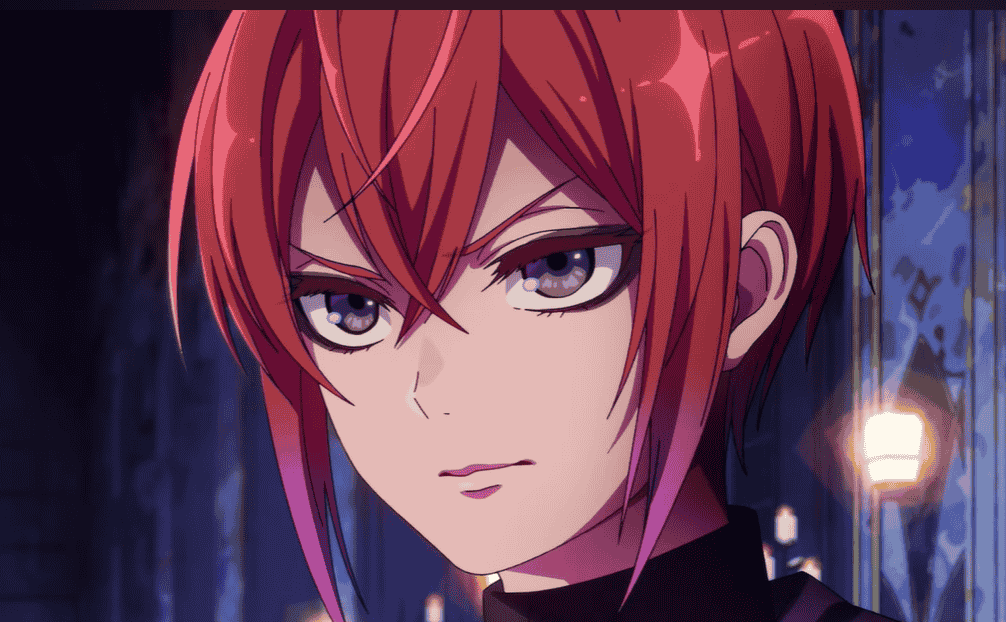
Season 1 concentrates on Heartslabyul Dorm, whose governance is dictated by Riddle Rosehearts, a hyper-regimented leader adhering obsessively to a codified system of rules derived from the Queen of Hearts mythology. The arc explores the epistemological conflict between authority and individuality, as Yu, in concert with Ace Trappola and Deuce Spade, navigates the psychosocial dynamics underlying Riddle’s authoritarianism and the dorm’s supernatural anomalies.
Production Context and Aesthetic Framework
- Chief Director / Showrunner: Takahiro Natori
- Director: Shin Katagai
- Head Writer: Yoichi Kato
- Character Designers: Hanaka Nakano & Akane Satō
- Composer: Takumi Ozawa
- Studios: Yumeta Company & Graphinica
The creative team demonstrates a commitment to aesthetic fidelity with the source material, manifesting a richly chromatic visual palette and fluid animation techniques that evoke the game’s baroque sensibilities while enhancing narrative immersion.
Voice Cast and Performative Continuity
Japanese Cast
- Yohei Azakami — Yuken Enma
- Natsuki Hanae — Riddle Rosehearts
- Seiichiro Yamashita — Ace Trappola
- Chiaki Kobayashi — Deuce Spade
- Ryota Suzuki — Trey Clover
- Tatsuyuki Kobayashi — Cater Diamond
- Mitsuru Miyamoto — Dire Crowley
- Noriaki Sugiyama — Grim
English Dub Cast
- Jonathon Ha — Yuken Enma
- Ben Diskin — Riddle Rosehearts
- Max Mittelman — Ace Trappola
- Johnny Yong Bosch — Trey Clover
- J. Michael Tatum — Dire Crowley
- Zeno Robinson — Ruggie Bucchi
- Jonah Scott — Jade Leech
- Alejandro Saab — Azul Ashengrotto
- Kellen Goff — Floyd Leech
The retention of the game’s principal seiyuu in the Japanese production ensures performative continuity, while the English dub incorporates an ensemble of distinguished voice actors, enhancing its transnational accessibility.
Musical Composition and Thematic Motifs
- Opening Theme: “Piece of my world” — Night Ravens
- Ending Theme: “Obedience” — Performed by Heartslabyul Dorm Ensemble
The musical score operates not merely as accompaniment but as an extension of the series’ affective register. The opening theme establishes tonal cohesion with the original game, while the ending composition gained independent popularity for its lyrical embodiment of the dorm’s ideological tensions.
Distribution Platforms
The anime is distributed exclusively through:
- Disney+
- Hulu
This dual-platform release model exemplifies Disney’s integration of anime content into its broader media convergence strategy.
Projected Continuations
Confirmed subsequent installments include:
- Season 2: Episode of Savanaclaw
- Season 3: Episode of Octavinelle
These forthcoming arcs promise to expand the diegetic universe, each interrogating alternative dormitory systems and the moral philosophies underpinning their respective villainous inspirations.
Critical Reception and Cultural Significance
Upon release, the premiere garnered a 9.2/10 rating on IMDb, signaling substantial audience and critical approval. Reviewers commended the animation’s visual sophistication, narrative concision, and thematic fidelity to the game’s world-building. As both an aesthetic and commercial enterprise, Disney Twisted-Wonderland: The Animation exemplifies the evolving synergy between Japanese narrative craftsmanship and Western intellectual property management, heralding a new paradigm in global transmedia storytelling.
League of Legends Worlds 2025 Anthem: Everything You Need to Know